
Physiotherapy services are provided in-house by a contracted service provider. Physiotherapy promotes mobility according to a resident's assessed abilities, wishes and preferences to enable the resident to be as independent as possible and provide an increased sense of wellbeing and better overall quality of life. Every resident in our home is assessed for Physiotherapy eligibility on a regular basis by our Physiotherapist and further supported through treatment by our Physiotherapy Assistant.
Our Services - Resident Services
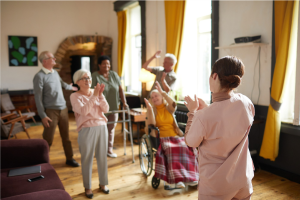
Our Resident Services philosophy is to encourage our Residents to maintain their unique person-centered identities, morals, values and beliefs as well as lifestyles to ensure meaningful leisure time. The Recreation staff strive to provide a comprehensive program inclusive of the 5 pillars of Leisure which are social, emotional, physical, spiritual and cognitive designed to meet the needs of our Residents. Under the direction and supervision of the Resident Services Supervisor, we take pride in our Activity Calendar being filled with a variety of programs offered during both days and evenings as well as weekends. Our programming is planned on a monthly basis as a team to ensure seasonal programs aimed to promote and fulfill the Residents' intellectual and cultural needs.
A few of our weekly programs include Bingo, Live Music and Music Therapy, Group Exercise and active / physical games such as balloon badminton. In the summer months we have bike rides weekly on our very own triage bike in which the staff pedal while the resident sits on the bench seat at the front feeling the wind in their hair! We also have walking clubs, and gardening programs considering our large green spaces and land granting us lots of vegetation opportunities. Pet Therapy is a 24/7 program as we have a therapy dog named Maple that also calls Maple View Lodge her home. She is a golden doodle with a very soft and gentle demeanor and may protect her home with the odd bark at the main entrance. We have regular artistic opportunities such as abstract painting and seasonal crafts. For our residents that would like to get involved, we have Residents Council meetings with the entire leadership team to ensure opportunities to support our residents in having a voice and sharing with us how we can support in improving their Long-Term Care experience. We have Community Outings such as boat tours and Christmas light tours in December. We do bake programs and cookie decorating for our residents that have a love for culinary creations. Our programs are delivered through one-to-one sessions as well for our residents with progressed Dementia that benefit from Montessori programming such as doll therapy or household tasks such as folding and sorting as well as comforting and sensory based programming such as aroma therapy and or light therapy/stimulation.
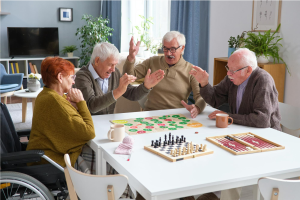
We are very grateful to have many volunteers who work closely with us in the Recreation Department to fundraise and support as well as assist and facilitate many of these recreation programs, one-to-one visits and special events.
On each home area, you will find our Recreation Boards. These boards show what programs are planned each day of the week. We also do a morning announcement sharing what fun activities are happening each day to ensure an audio option for our residents that prefer to listen. We also circulate the monthly recreation calendars to each resident room and e-mailed or mailed to families. Recreation calendars are also able to be picked up at the Home upon request.

The Restorative Care Program aims to support our residents in being as Independent as possible in performing Activities of Daily Living. Activities of Daily Living are eating/swallowing, walking, range of motion (active & passive), communication, dressing/grooming, transferring, splint/brace care, amputation/ prosthesis care, bed mobility, scheduled toileting and or bladder retraining. Simply put, Activities of Daily Living are the things we do every day to survive and thrive. Activities of Daily Living give us purpose and choice. We understand the importance in supporting our residents in having choice and being independent as this ensures dignity. Our in-house Restorative Aide under the supervision of the Resident Services Supervisor and in conjunction with the RAI Coordinator assesses residents on an on-going basis for decline in Activities of Daily Living and supports the multidisciplinary care team in carrying out the prescribed, person centered Restorative Treatment plans.
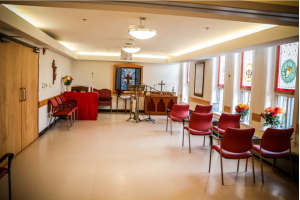
We recognize that spirituality is different for everyone and all of our unique values and beliefs feed the soul in such a positive way. The Recreation team coordinates with the Ministerial Association of Athens in delivering weekly church services at Maple View Lodge in our chapel for the residents. Families and friends are encouraged to attend. Communion to both Protestant and Catholic Residents are offered on a regular basis. Weekly visits offering counseling and providing emotional and spiritual support are offered. Staff welcomes and encourages visits by a Resident's personal spiritual advisor on a regular basis. Our Recreation team offers mindfulness classes and self work and worth programming to support those that practice healing through connection with oneself such as breath work and yoga.
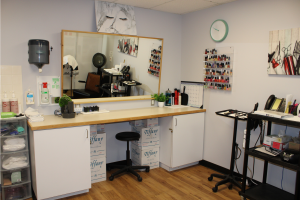
There is a hairdresser/barber on the premises two (2) days per week available at a reasonable cost to the residents. We understand the importance in supporting our residents in looking and feeling their best. No money is exchanged at the time of the service. Charges are added to the Resident's accommodation invoice at the end of the month.
The hairdresser/barber will attempt to accommodate residents and families who wish to have their hair styled for special occasions whenever possible. We ask that you provide sufficient notice (i.e. one week) in advance of special appointments.
 Behavioural Support Ontario (BSO)
Maple View Lodge has a Behavioural Support Worker and Team
The Behavioural Support team consists of our in-house Behavioural Support Worker (BSW), the Registered Nursing Team as well as many other health care disciples in house. The Behavioural Support Worker is a Dementia care expert and uses an in the moment, on the home area huddle style in supporting the team through education sessions as well as applying evidence based Behavioural Support techniques as per BSO to provide quality, multidisciplinary support to our residents with expressional behaviours to ensure person centered care with dignity. In addition, The BSW in conjunction with the registered team uses evidence-based assessment tools in getting to the root of a behavioural expression as often behaviours are a result of un-met needs and or desires.
BSO stands for Behavioural Supports Ontario.
The government has provided funding in Lanark Leeds and Grenville for select Long-Term Care (LTC) homes to have an in-house BSO team. BSO supports residents, family and staff in the LTC homes with non-pharmacological intervention to responsive expressions.
What is a responsive expression?
Responsive expressions have been identified as the following:
Agitation, wandering, sexual behaviour, sundowning, aggression, hallucinations and paranoia, repetition, “I want to go home".
What does the Behavioural Support Worker do?
Liaison with families and residents upon admission using an evidence-based assessment tool to ensure a person-centered transition into long term care taking into consideration the individuals unique background, experiences and values and beliefs.
Monitor and support a resident during transition into home.
Provide support to staff, resident and family through education and information sharing.
Collaborate with multidisciplinary health care team through weekly huddles to develop strategies for non-pharmacological interventions and person-centered care as well as consult with Psychogeriatric Resource Consultant, Mobile Response Team and Geriatric Psychiatry when needed.
Example of a supportive intervention to a responsive behaviour:
Expression: “I want to go home”
Meet the resident where they are; How do you feel coming home after a long day? For most of us, it’s a sense of relief or contentment. You are in a safe place and surrounded by people and things that put you at ease. When a resident says “I want to go home”, they want these same feelings.
How to help:
- Consider possible causes:
- Fatigue
- Over-stimulation
- Asking the person to complete an unfamiliar task that brings discomfort
- Strategies:
- Watch your tone of voice and body language. Speak calmly and use short sentences.
- The home a person speaks of may be where they grew up. Use this to start a conversation: “Where was home? Did you grow up in the city or the country? What was your favourite thing to do when you were there?” Even if you know the answers, still ask.
- Acknowledge their anxiety.
- Provide reassurance and validate their feelings.
- Don’t: Explain to them that this is their home now and they have nowhere else to go.
- Do: Acknowledge their feelings. “It must be hard to want to go home. Can you tell me about your home? Where did you live? What did you like doing there as a kid? Do you have any siblings?” Reminisce even if you know all the answers; you want them to feel safe and at ease as if they were at home. You might even hear a new story!
Community Resources and Supports
Our Community Resources and Supports include:
Psychogeriatric Resource Consultant, Providence Care
Mobile Response Team Nurse, Providence Care
Geriatric Psychiatry Nurse, Royal Ottawa Hospital
For more information visit the BSO Website.
Sign up to our Newsletter
Fresh updates, straight to your inbox. Sign up now to stay informed about all things happening in the County.